
Lucy Goode Brooks
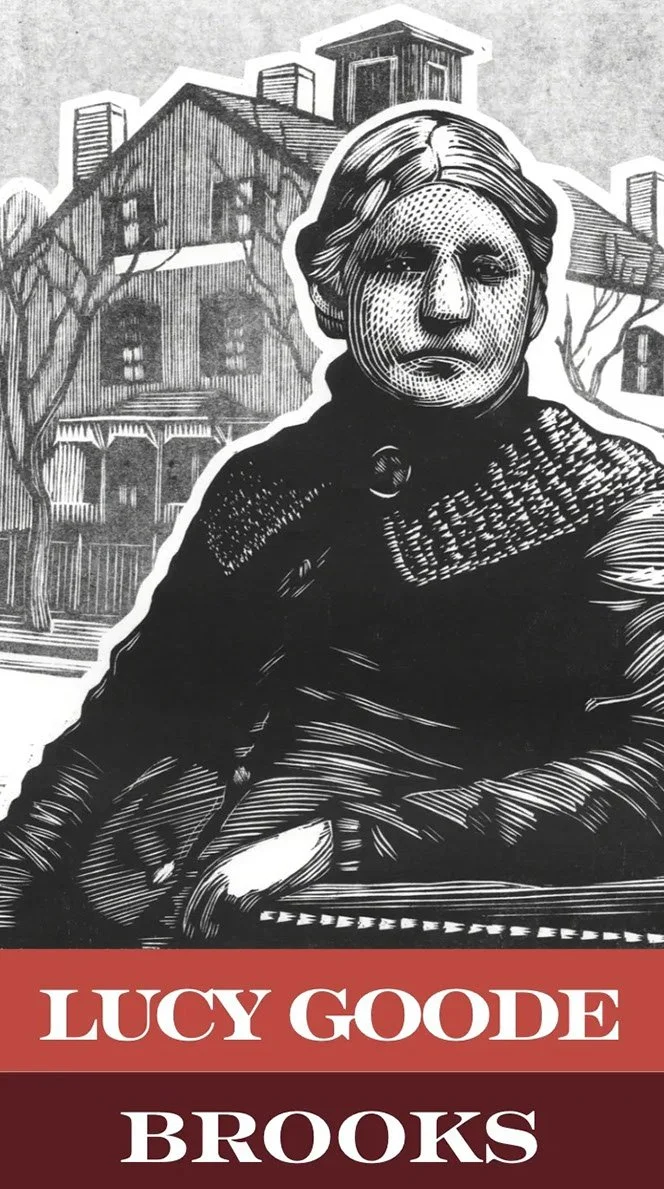
Portrait Courtesy of Meredith Carrington and Barry O'Keefe
LUCY GOODE BROOKS SQUARE
St. John Street from Charity Street to Federal Street
Lucy Goode Brooks was born enslaved on September 13, 1818 in the Richmond, Virginia area to Judith Goode and an unidentified white man. In the late 1830s, she met another enslaved man named Albert Royal Brooks, who she would marry in 1839. Although she was held in bondage by several enslavers, one gave her permission to live with her husband, who operated a livery stable and eating house, which helped him earn enough leftover earnings to purchase some of his family's freedom – with the exception of their oldest daughter, Margaret Ann Brooks, who was sold into slavery in Tennessee. Of their nine children, some of which were subjugated to urbanized enslavement, one of their sons, Robert Peel Brooks, became one of the first Black attorneys to practice law in the city after graduating from Howard Law School in 1875 – eventually becoming secretary of the Republican State Central Committee in 1880. After the Civil War, she pioneered the plight of parentless children by founding the Friends' Asylum for Colored Orphans in 1871, which operated as an orphanage until 1932 before transitioning into a child placement agency for foster families – which today operates as a child development center called Friends Association for Children. She was also an original member of First African Baptist Church after its split from First Baptist Church in 1841. She departed on October 7, 1900 and is buried at Barton Heights Cemetery, formerly known as Union Mechanics Cemetery.